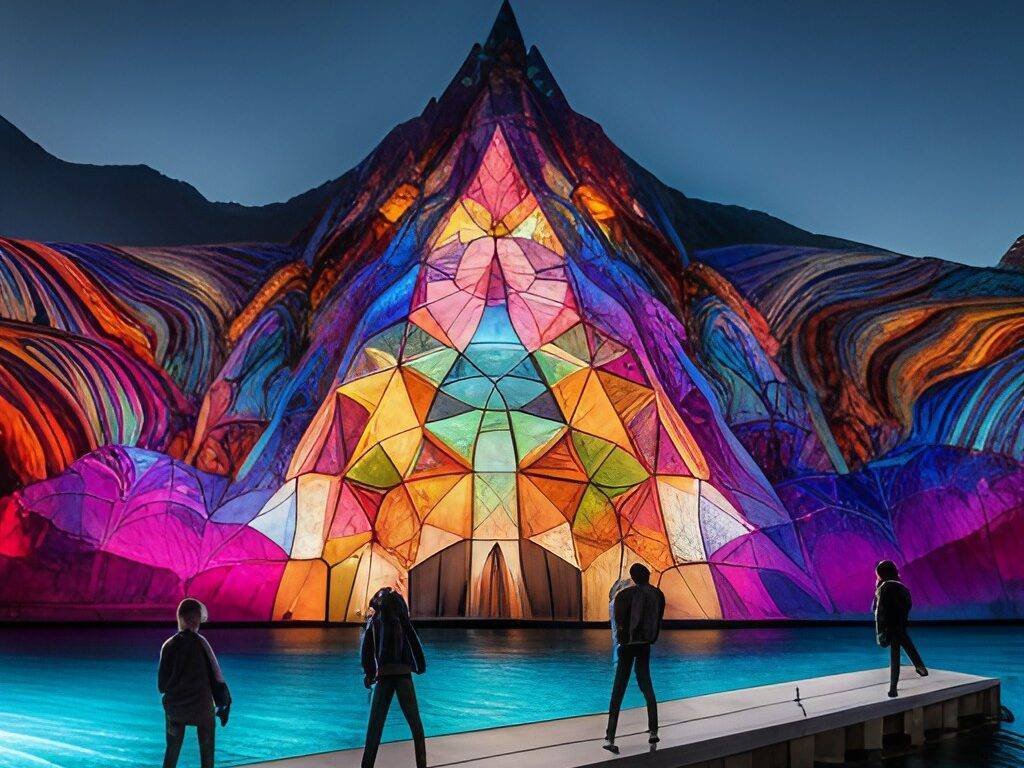
The night holds a unique canvas, waiting for light to tell stories, transform facades, and awaken public spaces. Imagine an ancient cathedral suddenly ablaze with shimmering galaxies, or a serene forest pulsating with bioluminescent patterns. This isn't just a fantasy; it's the breathtaking reality of Projection Mapping & Large-Scale Light Art, a captivating fusion of digital prowess and artistic vision that has redefined public interaction and urban aesthetics. From animating towering skyscrapers to bringing sculptures to life, this art form pulls viewers into immersive experiences, blending the physical and digital worlds in ways that feel utterly magical.
At a Glance: Your Guide to Projection Mapping & Large-Scale Light Art
- What it is: A dynamic digital art form that uses light, video, and technology to transform any surface into an immersive visual display.
- How it works: Visual content is meticulously aligned and "mapped" onto the unique contours of buildings, objects, or landscapes.
- The tools: High-powered projectors, media servers, specialized software, and sometimes interactive sensors.
- Key applications: Advertising, live events, museums, and especially enhancing public spaces and natural environments.
- Leading artists: Innovators like teamLab and Refik Anadol push boundaries by integrating art with science, data, and machine learning.
- The magic: Creates deep audience engagement, tells compelling stories, and offers interactive, unforgettable experiences.
- Considerations: Requires significant investment, meticulous planning, and careful management of environmental factors.
The Magic Unveiled: What is Projection Mapping & Large-Scale Light Art?
At its core, projection art is an electrifying form of digital expression, turning ordinary surfaces into extraordinary spectacles. It's the art of painting with light, where pixels become brushstrokes and buildings become canvases. By blending sophisticated video content with cutting-edge technology, artists craft immersive visual narratives that captivate, educate, and entertain.
This isn't a new phenomenon. The exploration of light and film began in the early 20th century, laying the groundwork for what was to come. But it was the late 20th and early 21st centuries, fueled by rapid advancements in digital projectors and mapping software, that truly ignited the field. Suddenly, the impossible became possible: projecting complex, animated visuals onto highly irregular surfaces with uncanny precision.
Today, this expansive field encompasses several distinct yet interconnected forms:
- Video Projection: This is the most common form, using pre-recorded or real-time video content to animate surfaces. Think dynamic visuals transforming a concert stage or a vibrant story unfolding across an urban facade.
- Light Art: Often more sculptural, this type uses illumination itself to shape and define space. It might involve subtle changes in color and intensity, or complex light installations that play with shadow and perception.
- Digital Art: This category focuses on projecting 2D graphics and intricate 3D animations, creating illusions of depth, movement, and transformation directly onto physical objects.
Regardless of the specific approach, the goal remains the same: to dissolve the boundaries between art, architecture, and technology, creating experiences that resonate deeply with viewers.
Pioneering the Light Canvas: Visionaries and Their Work
The landscape of projection mapping and light art is continuously shaped by groundbreaking artists and collectives who push the technical and conceptual boundaries. Their work transforms perception and redefines public engagement.
One of the most celebrated names is the Japanese art collective teamLab. Renowned for their digital art installations that blend art, science, and technology, teamLab creates mesmerizing, interactive environments. Their signature style often involves lush, evolving digital ecosystems where visitors' movements influence the artwork, blurring the line between observer and participant. Imagine walking through a digital waterfall that parts around you or a garden of light that blooms in response to your touch. Their pieces are not just viewed; they are experienced, fostering a profound sense of wonder and connection.
Another titan in the field is Refik Anadol. Anadol is a media artist, director, and pioneer in the aesthetics of data and machine intelligence. He uses real-time data sets – from city archives to biological information – to create breathtaking "data sculptures" and "machine hallucinations." His work often involves projecting these dynamic, algorithmically generated visuals onto architectural facades, turning static buildings into living, breathing data tapestries. His installations, such as Machine Hallucination: Nature Dreams, exemplify how data and machine learning can be harnessed to transform physical spaces into immersive, thought-provoking environments. It's a testament to how projection mapping isn't just about showing images, but about giving form to the unseen.
These artists, among many others, demonstrate that large-scale light art is more than just spectacle; it's a profound dialogue between technology, environment, and human experience.
Behind the Spectacle: How Projection Mapping Works
At its heart, projection mapping is an elaborate visual trick, but one based on meticulous precision and powerful technology. The fundamental principle is aligning visual content with the unique contours and surfaces of an object or space. It’s not just projecting a flat image onto a wall; it’s about making that image appear to be part of the wall, moving with its curves, windows, and architectural details.
The magic happens through a combination of essential equipment:
- High-Powered Projectors: For large-scale outdoor projects, you're not looking at a standard home theater projector. We're talking about industrial-grade beasts, often requiring 10,000 lumens or more per projector. The brighter the ambient light or the larger the surface, the higher the lumen count needed. Multiple projectors are often arrayed to cover vast or complex areas, requiring careful calibration.
- Media Server or Computer: This is the brain of your operation. It stores your digital content and runs the specialized software that handles the mapping process. For complex, multi-projector setups or interactive experiences, dedicated media servers offer robust processing power and reliability.
- Specialized Software: This is where the artistry and technical wizardry truly converge. Software like HeavyM, TouchDesigner, and Resolume Arena are industry standards. These tools allow you to:
- Import 3D Models: You can load a 3D model of your target surface (e.g., a building facade or sculpture) directly into the software.
- Content Creation & Manipulation: Design, edit, and play back your video and graphic content.
- Multi-Projector Blending: If you're using several projectors to cover a large area, the software seamlessly stitches their images together, eliminating harsh overlap lines.
- Warping & Masking: Distort the projected image to perfectly fit the unique shape of the surface and mask out any light spill onto unwanted areas.
- Optional Sensors or Cameras: For interactive installations, these components are crucial. Sensors (like motion sensors, depth cameras, or touch sensors) detect audience movement or other environmental data, which then triggers changes in the projected visuals or sound. Cameras can also be used for real-time tracking of surfaces or people.
Together, these components create a system that can turn a static structure into a dynamic, living canvas, ready to tell any story the artist dreams up.
Crafting the Illusion: Step-by-Step Installation Guide
Bringing a projection mapping project to life is a meticulous process, demanding both technical skill and an artistic eye. It’s akin to choreographing a digital dance on an architectural stage.
The Foundation: Preparing Your Surface
Before any pixels hit the surface, careful preparation is key:
- Site Survey and Measurement: Begin with a thorough assessment of your chosen object or space. This involves detailed measurements, photographic documentation from the projector's perspective, and noting any obstacles or unique architectural features.
- Creating a 3D Model: This is critical. You'll need an accurate 3D model of the physical surface you plan to project onto. This can be created using CAD software, photogrammetry (where multiple photos are stitched together to form a 3D model), or even LIDAR scanning for highly precise architectural details.
- Importing into Software: Load your 3D model into your chosen projection mapping software (e.g., HeavyM, TouchDesigner, Resolume Arena). This virtual representation of your canvas is where you'll begin designing and aligning your content.
- Virtual Alignment: Within the software, you virtually position your "projector" in the same location and angle it will occupy in the real world. This initial alignment ensures your content is designed with the correct perspective.
- Content Design: With your virtual canvas ready, you can start creating or adapting your visual content to fit its specific dimensions and features. Think about how the windows, ledges, or curves of a building can become part of your animation, rather than just obstacles.
Advanced Techniques for Seamless Installations
For truly breathtaking and convincing projection art, artists employ several advanced techniques:
- Blending: When covering very large surfaces, a single projector rarely suffices. Multiple projectors are used, and their images overlap. Blending is the process of smoothing out these overlapping zones, making them invisible to the naked eye. The software meticulously adjusts the brightness and color of the overlapping pixels to create a single, continuous image. Without proper blending, you'd see harsh lines where one projector's light meets another's.
- Masking: This technique is about precision. It involves "hiding" or cutting off unwanted light spill. For instance, if you're projecting onto a building facade, you don't want light shining into windows or onto adjacent trees. Masking allows you to draw precise virtual cutouts around the architectural elements you want to illuminate, ensuring your light stays exactly where it's intended.
- 3D Mapping (or Perspective Mapping): This is the core magic trick. Instead of simply projecting a flat image, 3D mapping warps and distorts the visual content to perfectly fit the contours of a complex, three-dimensional surface. This creates the illusion that the projected content is actually part of the object, adding depth, volume, and an almost sculptural quality to the visuals. It's how a flat image can appear to "wrap" around a column or flow into a recessed archway.
Mastering these techniques transforms a simple light show into an immersive, believable, and often jaw-dropping experience. It's the difference between seeing an image on a building and feeling like the building itself has come alive.
Beyond the Visuals: Creating Immersive & Interactive Experiences
Projection mapping isn't just about passively viewing beautiful images; it's increasingly about creating holistic, multi-sensory experiences that engage audiences on deeper levels. The goal is to transport viewers, making them feel like an integral part of the artistic narrative.
Engaging Through Immersion and Storytelling
The power of projection art lies in its ability to envelop an audience. By strategically mapping visuals onto an entire environment—walls, floors, and even ceilings—artists craft truly immersive experiences. Think beyond a single screen; imagine stepping into a room where every surface becomes part of a continuous, flowing narrative. This enveloping effect, often combined with directional sound design and even carefully introduced scents, creates a powerful sense of presence and wonder.
A prime example is "The Van Gogh, Starry Night" exhibition, which has toured globally. Instead of merely displaying Van Gogh's paintings on walls, the exhibition uses large-scale projection mapping to animate his masterpieces across enormous surfaces. Visitors don't just see Starry Night; they are surrounded by its swirling brushstrokes, feeling as if they've stepped inside the painting itself. The movement, sound, and sheer scale amplify the emotional impact, making the familiar art feel fresh and profoundly moving.
The Power of Interaction
Taking engagement a step further, many projection art installations now incorporate interactive elements, allowing audiences to directly influence the visuals and soundscape. This transforms spectators into participants, fostering a unique sense of ownership and connection to the artwork.
Interactive installations typically use a combination of sensors and cameras:
- Movement Sensors: Detect audience presence and motion, allowing visuals to react as people walk through a space.
- Depth Cameras (like Microsoft Kinect): Can track individual body movements, enabling more precise interaction, such as gesturing to "paint" with light or control on-screen elements.
- Voice/Sound Sensors: Allow audience sounds or spoken words to influence the projected art.
- Touch Sensors: When projecting onto a floor or touch-sensitive panel, allow direct interaction through physical contact.
Refik Anadol’s Machine Hallucination: Nature Dreams is a masterclass in interactive data art. In some iterations, visitors' movements within the installation generate unique visual sequences derived from vast datasets of natural imagery. The artwork isn't static; it evolves and responds, creating a dynamic dialogue between human input and algorithmic creativity.
These interactive experiences elevate projection mapping from a visual spectacle to a truly participatory art form, forging memorable connections that resonate long after the lights dim. They remind us that art can be a conversation, not just a monologue. The teams behind such captivating works often involve a diverse group of creatives, from technical wizards to concept artists, embodying what we explore in articles like The Cast of Electric Bloom, highlighting the collaborative spirit that breathes life into these digital dreams.
Where Light Meets Life: Real-World Applications
The versatility of projection mapping and large-scale light art means its applications are incredibly diverse, touching everything from high-stakes advertising to tranquil nature experiences. It's a tool for transformation, capable of adapting to almost any environment or message.
Advertising: Creating Unforgettable Brand Experiences
In the competitive world of advertising, standing out is paramount. Projection mapping offers a truly eye-catching way to do just that. Brands can transform buildings, products, or even entire city blocks into dynamic advertisements that capture attention and create buzz.
- Mini Case Snippet: Nike's Interactive Basketball Court in Manila (2019): Nike launched "House of Mamba," an LED-lit, full-sized basketball court in Manila. While not traditional projection mapping, it shared the immersive, light-driven ethos. They projected dynamic training programs and visual effects onto the court, creating an unparalleled, interactive experience for players. This demonstrated how light art could enhance sports, making training feel like a video game and deeply engaging participants with the brand's innovation message.
Live Events: Elevating Concerts and Festivals
Concerts, festivals, and theatrical productions are natural homes for projection mapping. It allows artists to integrate visuals directly into stage designs, enhance performer narratives, or even turn entire festival grounds into dynamic environments.
- Mini Case Snippet: Amon Tobin ISAM Live Tour: Electronic musician Amon Tobin's ISAM Live tour set a new standard for stage design. He performed from within a complex 3D cube structure onto which intricate projection mapping was flawlessly applied. The visuals transformed the cube, making it appear to expand, contract, and break apart, creating an unparalleled illusion that integrated the artist, the music, and the visual environment into one cohesive, mind-bending experience.
Museums and Galleries: Animating Collections and Spaces
Museums are increasingly embracing projection art to engage visitors, animate collections, and create educational yet inspiring experiences that transcend static displays.
- Animating Artifacts: Projecting historical narratives or interactive information directly onto ancient artifacts, bringing them to life in new ways.
- Immersive Galleries: Creating entire rooms where historical periods, scientific concepts, or artistic styles are brought to life through floor-to-ceiling projections. This offers a dynamic, multi-sensory learning experience that traditional placards cannot match.
Nature: Highlighting Beauty and Environmental Issues
Perhaps one of the most poignant applications is projecting onto natural landscapes. Mountains, forests, waterfalls, or even the night sky become canvases for art that often seeks to highlight natural beauty, raise environmental awareness, or simply offer a serene, awe-inspiring experience.
- Environmental Storytelling: Artists project visuals onto glaciers to illustrate climate change, or onto ancient trees to tell stories of biodiversity.
- Public Parks and Gardens: Interactive light installations in public parks invite visitors to engage with nature in new ways, creating accessible art experiences for communities. These installations can transform mundane evening walks into magical journeys, adding a layer of contemporary wonder to natural settings.
Each of these applications underscores the power of projection mapping to not just entertain, but to inform, inspire, and deeply connect with diverse audiences in varied settings.
Navigating the Lumina Labyrinth: Challenges & Considerations
While the potential of projection mapping and large-scale light art is immense, realizing these ambitious visions comes with its own set of significant challenges. These aren't just minor hurdles; they require meticulous planning, substantial investment, and a deep understanding of both technology and environment.
The Investment Hurdle
The most immediate consideration is cost. High-quality projection mapping is not a budget-friendly endeavor:
- Projectors: As mentioned, large-scale outdoor projects demand high-lumen projectors (10,000+ lumens). These machines can cost tens of thousands of dollars each, and many projects require multiple units.
- Media Servers: Powerful media servers capable of handling complex content, real-time rendering, and multi-projector outputs represent another significant investment.
- Software Licenses: Professional-grade mapping software requires licensing fees, often substantial, reflecting their advanced capabilities.
- Personnel: Beyond equipment, you need a highly skilled team of technical directors, content creators, system integrators, and project managers. Their expertise is invaluable but comes at a professional rate.
For these reasons, many large-scale projects are undertaken by established agencies or funded by major brands, public art grants, or large event organizers.
Environmental Factors: The Outdoor Gauntlet
Outdoor installations, while often the most spectacular, present unique environmental challenges:
- Weather: Rain, snow, wind, and extreme temperatures can damage equipment and disrupt projections. Robust weatherproofing and protective enclosures are essential.
- Ambient Light: Streetlights, vehicle headlights, moonlight, and even city glow can significantly diminish the perceived brightness and contrast of projections. Careful site selection, timing, and using higher-lumen projectors are crucial to combat this "light pollution."
- Natural Contours: While projection mapping excels at adapting to contours, extreme irregularities, deep recesses, or highly reflective surfaces can complicate accurate mapping and reduce visual fidelity.
- Power & Logistics: Deploying power infrastructure, securing equipment, and managing cabling over large public spaces require extensive logistical planning and permits.
Meticulous Planning and Execution
Every large-scale projection project demands an obsessive level of detail:
- Site Survey & 3D Modeling: As discussed, precise measurements and accurate 3D models are non-negotiable. Errors here cascade into alignment issues during the actual projection.
- Content Creation: Content must be designed specifically for the unique canvas. Generic video footage won't cut it. It needs to be custom-tailored to highlight architectural features, rather than just be projected onto them.
- Projector Placement: The physical location and angle of each projector must be perfectly calculated to ensure coverage, minimize distortion, and facilitate seamless blending.
- Calibration: The process of aligning multiple projectors, color-matching them, and geometrically correcting the image to fit the surface is time-consuming and requires expert precision.
Technological Constraints
While technology is rapidly advancing, current limitations still exist:
- Resolution and Brightness: There's always a trade-off. Achieving incredibly high resolutions across vast surfaces often requires an exponential increase in projectors and processing power, escalating costs. Similarly, extreme brightness to cut through heavy ambient light is technically challenging and expensive.
- Interactivity Latency: For highly interactive installations, minimizing the delay between a user's action and the visual response (latency) is critical for a smooth experience. Achieving near real-time interaction on a large scale can be technically demanding.
Despite these challenges, the continuous innovation in projector technology, software capabilities, and creative techniques means that the future of projection mapping and large-scale light art remains incredibly bright, pushing the boundaries of what's possible in public art and immersive experiences.
Illuminating Your Vision: Next Steps in Light Art
Projection mapping and large-scale light art offer an unparalleled opportunity to transform spaces, tell stories, and create truly unforgettable public experiences. If you've been inspired by the magic these installations weave, here's how you can take your next steps:
For the Curious Enthusiast:
- Seek Out Local Installations: Keep an eye on local news and event listings for light festivals, public art installations, or building projections in your city. Experiencing these works firsthand is the best way to appreciate their scale and impact.
- Explore Online Galleries: Websites like Behance, Vimeo, and dedicated art journals feature extensive portfolios from artists and studios specializing in projection mapping. This is a great way to discover new talent and diverse applications.
- Follow Key Artists and Collectives: Dive deeper into the work of innovators like teamLab, Refik Anadol, and others. Many share behind-the-scenes glimpses and technical insights into their creations.
For the Aspiring Creator or Event Planner:
- Start Small: Begin experimenting with entry-level projection mapping software and a consumer-grade projector. Tools like HeavyM and MadMapper offer accessible ways to learn the fundamentals on small objects or interior walls.
- Learn the Software: Invest time in mastering a projection mapping software. Tutorials and online courses are readily available for popular choices like TouchDesigner, Resolume Arena, and HeavyM. Understanding the technical workflow is crucial.
- Build a Portfolio: Even simple projects showcasing your understanding of content creation and mapping principles can be valuable.
- Network: Connect with other artists, technical directors, and event professionals in the light art and digital media fields. Collaboration and mentorship are invaluable.
- Consider Professional Consultation: For larger projects, engaging with experienced projection mapping companies or consultants can save significant time and money, ensuring technical feasibility and artistic integrity from the outset. Their expertise in equipment selection, site assessment, and content integration is critical.
Whether you're an admirer of light's transformative power or a visionary looking to harness it, the world of projection mapping and large-scale light art is an open invitation to reimagine public spaces. These aren't just temporary spectacles; they are powerful statements about human creativity, technological prowess, and our shared desire to see the world illuminated in new and wondrous ways.